
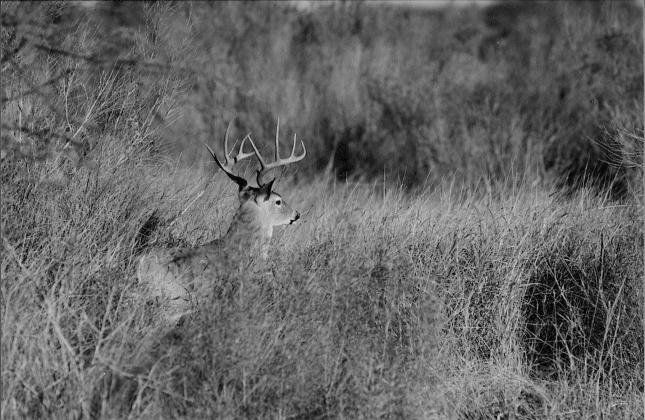
 Texas has a robust deer herd numbering close to 5 million animals, way more than any other state.TPWD is predicting average to above average antler growth on bucks in most areas of the state. (Photo by Matt Williams)
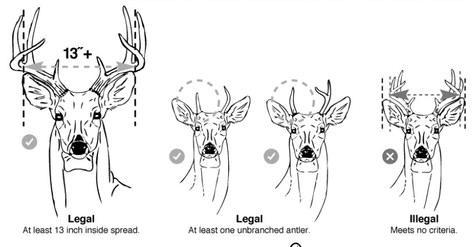 Hunters should be mindful of 13 inch minimum antler restriction in effect in 117 counties. A point is projection that extends at least one inch from the edge of a main beam or another tine.The tip of the main beam is also a point. (TPWD)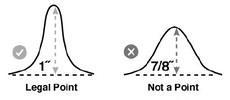
2025 DEER HUNTING PREVIEW
You can have those sunrise tee times and daybreak jaunts on the e-Bike. My idea of a good time on a brisk fall morning is witnessing the dawn of a new day from the confines of a Texas deer blind.
There are nearly 800,000 other men, women and youngsters is this state who share the passion, and most of them will be in the field bright and early on Saturday, November 1. That is the opening day of the 2025-26 general season for white-tailed deer in the North and South hunting zones.
There are also Youth Only seasons for licensed hunters 16 and under on Oct. 24-26 and Jan. 5-18.
One of the neat things about deer hunting is it does not discriminate against age, gender or physical challenges. Everyone from elementary age cheerleaders and housewives to bankers and blue collar workers can play the game. Thousands of acres of public land can be accessed for free, or with an inexpensive pubic hunting permit available wherever hunting licenses are sold. The permit costs $40.
Experts are saying the deer season should be a good one for a high percentage of Texas’ deer hunting fraternity.
No surprise there.
Texas has a robust deer herd estimated at about 5 million animals. That’s more than 3-4 times the number found in other top states. Hunter success in Texas has ranked beyond 60 percent for several consecutive years.
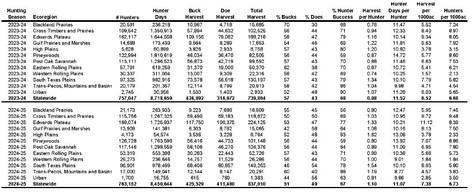
Last season, Texas hunters enjoyed a super success rate of 67 percent with a total harvest of 837,000 whitetails, including about 425,500 bucks and 411,000 does.
Translation: If you like to deer hunt, Texas is a pretty good place to be. 252 or state’s 254 counties have a legal deer season.
Blaise Korzekwa knows all about the high quality of deer hunting Texas has to offer. Korzekwa heads up the white-tailed deer program for the Texas Parks and Wildlife Department.
The wildlife biologist is forecasting a banner season for the most of the state. The outlook is based largely on good fawn recruitment over the last several years and optimum range conditions that blanketed much of Texas during the early stages of antler development last spring and early summer.
“We had a pretty mild summer, which will aid in fawn survival,” Korzekwa said. “Texas began the growing season under drought conditions in March, but with the exception of the Edwards Plateau and South Texas, the rest of the state did receive abundant rainfall late spring. The vegetation growth from these rains boosted antler development and allowed does to pack on reserves for fawning and lactation, and those regions should expect an excellent season.”
Korzekwa said the Edwards Plateau and South Texas ecoregions did receive receive significant rainfall over the summer resulting in mild temperatures and allowing for a late growing season green-up. However, he believes the moisture came too late to benefit antler development much.
Korzekwa noted that portions of the state were still in drought conditions in late September and early October. Burn bans were in effect in dozens of counties as of Oct. 14. Korzekwa predicts the dry landscape will limit natural food supplies and make corn feeders and available food plots more attractive to deer.
“While hunters tend to have a bit more early season success when conditions are dry and deer congregate around these artificial resources, the deer population is in better shape when range conditions are better,” he said. “Overall, Texans will experience another great deer season and historically good fawn recruitment over the last several years will provide hunters plenty of opportunities to bag a quality buck.”
Here’s another good piece of advice:.If you wound a deer and the blood trail plays out, back off immediately and don’t hesitate to contact someone with a good tracking dog. Otherwise, you could push the animal and increase the risk of never recovering it.
Matt Williams is a freelance writer based in Nacogdoches. He can be reached by email, mattwillwrite4u@yahoo. com.
Deer Season At A Glance
Archery Only: Sept. 27 - Oct. 31 General
North Zone: Nov. 1 - Jan. 4 South Zone: Nov. 1- Jan. 18 Youth-Only North Zone: Oct. 24-26 and Jan. 5-18 South Zone: Oct. 24-26 and Jan. 5-18 Special Late Season North Zone: Jan. 5-18 South Zone: Jan. 19- Feb. 1 Muzzleloader: Jan. 5-18 Top 5 Texas Whitetail Regions 1.) Edwards Plateau: 1.6 million deer 2.) Post Oak Savannah: 714,000 deer 3.) Cross Timbers: 788,000 deer 4.) South Texas Plains: 527,000 deer 5.) Pineywoods: 327,000 deer Legal Reminders * Mandatory Reporting: White-tailed deer harvested and tagged with a hunting license tag in certain counties during any open season (archery, general muzzleloader, and youth) must be reported within 24 hours of harvest via the “Texas Hunt & Fish” mobile application or online version.
* Archery Only Counties: Counties with mandatory buck and antlerless deer harvest reporting: Collin, Dallas, Grayson, Rockwall. An Archery Endorsement is required to hunt deer during the Archery-Only and general seasons. No firearms are allowed in these counties.
Any person, regardless of physical ability, may use a crossbow to hunt game animals or game birds in any county, including Collin, Dallas, Grayson, and Rockwall counties, during a general open season or Eastern spring turkey season.
* Antlerless Reporting: Counties with mandatory antlerless deer harvest reporting: Austin, Bastrop, Caldwell, Colorado, Comal (East of I-35), De Witt, Fayette, Goliad (North of US 59), Gonzales, Guadalupe, Hays (East of I-35), Jackson (north of US 59), Karnes, Lavaca, Lee, Travis (East of I-35), Victoria (North of US 59), Waller, Washington, Wharton (North of US 59), and Wilson.
* Special Antler Restrictions: Antler restrictions apply in 117 counties. In these counties, hunters are limited to two bucks, but only one of the bucks may have an inside spread of 13 inches or more. The second legal buck must have at least one unbranched antler.
Bucks with two branched antlers and an inside spread less than 13 inches are protected from harvest in antler restriction counties. The distance from the tip of one ear to the tip of the other ear, when the ears are in the “alert” position may be used as a guide to help estimate the inside spread. If the inside spread extends past the ears, it is likely to be at least 13 inches.
The purpose of antler restrictions is allow more bucks to reach 3 1/2 years of age before they are legal for harvest. Check regulations for the county in which you will be hunting at the TPWD website.
* Tagging Options: Tags from a physical hunting license of the person who killed the deer must be correctly and legibly completed (including name of property and county) and immediately attached to the animal (exception is properties with special-issued tags such as MLDP tags).
* Late Season Restrictions: In counties with a Special Late Season, harvest is restricted to antlerless and unbranched antlered deer (a buck with at least one antler that has no more than one point). A point is a projection that extends at least one inch from the edge of a main beam or another tine. The tip of the main beam is also a point.
* Youth Only: Only licensed hunters 16 years of age or younger are eligible to participate in youth-only deer seasons.
* Carcass Disposal: Carcass disposal requirements apply to white-tailed deer and mule deer carcasses or carcass parts that are transported away from the property of harvest. Unused parts must be disposed of in a commercial trash service, or returned to the property where the animal was harvested, or buried at least three feet below the ground and covered with at least three feet of earthen material.
Harvested deer or deer heads may be taken to a commercial processor or taxidermist and the processor or taxidermist must properly dispose of unused parts.
* Wildlife Resource Document: If you are given venison or are transporting another hunter’s deer, make sure the animal is tagged and that you have a Wildlife Resource Document that is properly filled out. The document must contain the hunter and receivers names addresses, parts in transport, date/location of harvest and the hunter’s hunting license number. The WRD can be downloaded on the TPWD website.
* Hunter Education: Every hunter born on or after Sept. 2, 1971, must successfully complete a Hunter Education Course. Printed or electronic proof of certification or deferral is required to be on your person while hunting. Certification is not required to purchase a hunting license. Minimum age of certification is 9 years. In-person course cost is $15. Persons 17 years of age and older have the option of taking the course in person or on- line.
* Deferral Option: Allows a person 17 years of age or older who has not completed a hunter education program to defer completion for up to one year. A deferral may only be obtained once and is only valid until the end of the current license year.
* Bowhunter Education: Bowhunter education certification is required on the Hagerman National Wildlife Refuge in Pottsboro. Bowhunter education does not substitute for Hunter Education certification.
* Public Baiting/Stands: Hunting over bait is not allowed on National Forests and Grasslands in Texas. Only portable deer stands are allowed in National Forests and Grasslands, no more than 72 hours in one location; no permanent stands allowed. Portable stands that cause damage to trees are prohibited. No hunting blinds are allowed within 50 yards of any designated road, marked unit boundary, or designated campsite.
* Hunter Orange: Public land hunters must wear at least 400 inches of hunter orange clothing and headwear with at least 144 square inches on the chest and back during daylight hours when deer hunting with firearms is permitted.
* Legal Shooting Hours: Legal shooting hours are 30 minutes before official sunrise to 30 minutes after official sunset.
Safety Reminders
* Always be sure of your target. Never aim or shoot at something you “think” is a deer.
* Know what is beyond your target before pulling the trigger. Don’t shoot in the direction of public roads, houses, buildings, etc…..
* Treat all firearms as if they are loaded. Always make sure firearms are unloaded before entering/exiting deer stands, entering vehicles or crossing fences.
* Be sure the only ammunition you carry is the same caliber of the firearm.
* Don’t let excitement cause you to react unsafely. Never run toward a downed animal with a loaded firearm with the gun safety off.
* Don’t drink alcohol or take drugs before or while handling firearms.
* Always wear a safety harness and use a life line while hunting from elevated tree stands. Stay attached to tree at all times when ascending and descending from the stand.