
 This juvenile black bear has been sighted more than a dozen times in four East Texas counties since July 15. One of the last sightings was August 25, when it showed up on a trail camera in Houston County.The bear as also been documented in Cherokee, Rusk
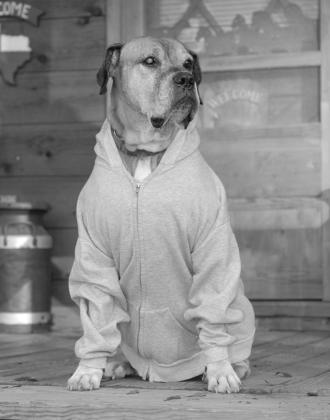 The author’s dog, Slug-Go, nearly got into serious trouble in July 2004 when he followed his nose to a mature black bear in the New Mexico high country.The dog’s escape route led the angry bear straight back to its owner. Translation: It’s never a g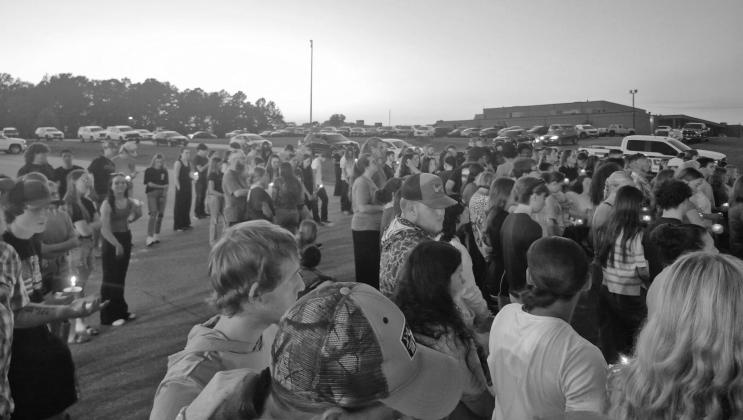

 A candlelight vigil was held at Queen City High School in early August as hundreds of people showed up in love and support to remember Caitlyn Sponholz who passed away in a motorcycle accident.
Going Walkabout
All of this recent chatter about black bear sightings in several East Texas counties took me down memory lane to one of most spooky moments I have ever experienced in the wild.
Some valuable lessons were learned that morning. At the top of the list: Never cut an unleashed dog loose in bear country. Ever. Often times, the dog will bring the bear straight back to you.
I’ve told this tale here before, yet it is always worth retelling anytime black bears come to mind.
The scene unfolded in July 2004 at about 10,500 feet in the Sangre De Christo mountains in northern New Mexico. A friend and I had hiked to the crest of a steep ridge in Unit 63, where John Burk and I had tag teamed a public lands bull elk during archery season the previous fall.
The big 5X5 came barreling in to the sounds of my satellite bugle call. Burk drilled it as it skirted right in an attempt to catch wind of an unwelcome suitor that in reality was not there.
Revisiting the Spot
My friend, Chet Williams of Lindale and I had hiked to the spot where the mature bull died amid a stand of aspens after the broadhead punched through its heart. Burk and I had field dressed and quartered the animal there before hauling the meat off the mountain in saddle panniers with help of my grey gelding, Reno.
Williams and I were surprised to find much of elk’s skeleton still intact when we revisited the hallowed spot shortly after daylight roughly 10 months later. Just a few feet away lay a portion of the tan hide.
Ol’ Slug-Go had tagged along on the jaunt, as well. Slug-Go was a flop-eared cur I raised from a pup. I named him after a fishing lure that jump started the soft stick bait craze more than three decades ago.
Blind in one eye and grey around the muzzle, Slug-Go died of cancer in 2010 at the ripe age of 14. Surprisingly, heart failure didn’t get him that day.
It was a crisp, spring morning and Williams and I decided to walk the ridge and check out some new country. Elk and deer sign were plentiful as we crept quietly across the aspen cluttered ridge, deeper into Carson National Forest.
Week old droppings littered the ground and mature aspens bore deep scars inflicted by elk that had grubbed for nutrition to carry them through many harsh winters. Large boulders and deadfalls cluttered the forest floor.
It looked like bear country. And it was. About 1/2 mile up the ridge, I felt a cool breeze in my face. Moments later, Slug-Go pointed his nose to the sky and disappeared in the dark timber ahead.
“He smelled something,” I remarked. Not thinking much about it, we continued our trek for about another 100 yards. That’s when the still woods erupted with a series of deep grunts unlike anything either of us have ever heard. My partner was the first to pinpoint the source.
The Bear’s Lair
“It’s a bear!!” Williams yelled.
Seconds later, I saw large cinnamon-colored black bear racing through the woods at a fast pace. Problem was, the animal wasn’t headed the opposite direction.
The bear was hot on Slug-Go’s heels. The dog was bringing it straight to us!
Ol’ Slug-Go maintained a short lead, but kept a watchful eye on the bear in the process, barking occasionally over his shoulder as he lured the angry animal dangerously close.
The bear had charged within 15 feet of us before I finally managed to draw a .357 pistol from my hip holster. Luckily, I didn’t attempt to use it.
Williams had begun waving his arms and yelling in an attempt to get the bear’s attention. Once the animal realized our presence, it veered to the right and vanished into the forest. Slug-Go sat at my feet.
Williams and I looked at one another in disbelief as he recalled what he saw.
“It was about 35 yards away,” he said. “The dog was standing about five yards away from the bear and it stood up with its arms outstretched to the side. Then it lunged and started chasing him. That’s when all the noise started.”
The bear was full grown. Williams estimates it stood about 5-6 feet tall. I got a good look at the bear’s front side as it raced by and melted into the woods behind us. The animal was hog fat and probably weighed 300 pounds. Maybe more.
In looking back, Williams and I both agree that we set ourselves up for a potential disaster. We did everything wrong.
Allowing Slug-Go run free without a leash in known bear country was the biggest mistake of all. I’ve since been told that a clash between the two animals will frequently end with the dog leading the bear right back to the owner pretty frequently.
Another was walking into the wind. In bear country, it’s always best to walk with the wind at your back and to make noise along they way.
The idea is for the wind to carry your scent ahead. This will warn any bears of your presence. Black bears are skittish animals and will usually run away at the hint of a human. Experts say black bears usually aren’t aggressive, but will defend themselves against intruders when pressed, threatened or taken by surprise.
East Texas Walkabout
Eastern Texas isn’t bear country, but it once was. Native breeding populations have been absent from the region for nearly a century. However, bordering states including Oklahoma, Arkansas and Louisiana have sizable populations with limited hunting seasons.
For those who may not have heard, a black bear from the one of the adjoining states has apparently gone walkabout in eastern Texas.
The bear was first documented on July 15 by two different landowners in trail camera pictures in Cherokee County. It has since been seen, photographed or videoed more than a dozen times at different locations in Cherokee, Rusk, Anderson and Houston County, according to Texas Parks and Wildlife Department wildlife biologist Randall Kroll of Lufkin.
Kroll said a security camera caught the bear crossing a homeowner’s yard near Kroger in Henderson and it was videoed near Lake Striker a few days later. It was also seen along the shores of Lake Jacksonville and documented on a trail camera near Elkhart in Anderson County. On Aug. 20, a Houston County property owner saw the animal on a pond dam feeding on a dead fish and it showed up on a trail camera on August 25, also in Houston County.
TPWD wildlife biologists Ruben Gay, Rusty Wood and Kroll have investigated and confirmed many of the sightings. They believe it is the same bear, likely a juvenile male estimated to weigh about 130 pounds. Experts are unsure which state it originated from.
Most of the trail camera photographs have occurred in relation to food sources like a corn feeders, mineral feeder or corn piles. They believe the animal traveled roughly 128 miles between July 15 and August 25.
“He’s just out covering some ground, possibly trying to establish its own range,” Kroll said. “It’s not uncommon for these young bears to venture out once they leave their mother.”
The biologist said this is first confirmation of a black bear in this far south in East Texas in quite a while. Sightings happen more frequently in far northeast Texas along the Red River corridor around Bowie, Cass, Red River and Morris counties, he said.
Kroll said TPWD has not stocked any black bears in East Texas. Nor does the agency have intentions of doing so.
Black bears are on the threatened species list in Texas. It is illegal to kill, injure, take, possess, capture, or transport one. Penalties for killing a black bear in East Texas can include a combination of fines and jail time, including civil restitution penalties exceeding $12,000, according to TPWD reports.
Although black bears are not normally aggressive, they should be left alone. If you see one, remain calm, stay far away as possible but do not run. Secure all food sources.
And always keep dogs on a leash in known bear country.
Matt Williams is a freelance writer based in Nacogdoches. He can be reached by email, mattwillwrite4u@yahoo.com.