
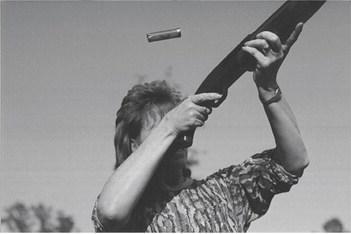
 Most dove hunters aren’t very efficient with their shotguns. Past studies have shown that dove hunters will shoot 5-9 times for every dove they bag. (Photo by Matt Williams)
 Many shotguns have threaded muzzles designed to accept interchangeable choke tubes.The tubes should be stamped by the manufacturer for easy identification. Skeet and improved cylinder are popular with dove hunters. (Photo by Matt Williams)
 Hunters should make every effort to locate downed birds. Grey in color, doves can at times blend in with ground clutter so well they can hide in plain view. (Photo by Matt Williams)
Some useful words of advice for Texas dove hunters
Texas dove hunters got a timely reprieve from the blazing summer heat when a mild cool front passed through the state just ahead of the September 1 season opener in the North and Central Zones. The welcomed change in the weather spurred forecasts calling for overnight lows in the 60s and 70s and daytime highs in 90s across most of the state over the long Labor Day weekend.
The slight drop in temperatures surely made things more tolerable in field for hunters and their K9 buddies. Unfortunately, the nicer weather probably didn’t do squat for their wing shooting skills.
Most dove hunters are pretty crappy shots with a scattergun. Past studies have shown dove hunters will spend 5-9 shot shells for every bird they bag.
In Texas, hunters shot about 6.5 million doves last season. Do the math. If the shotper- bird average is on target, dove hunters shot at least 32.5 million shot shells last season.
There are 25 shotgun shells to a box. At five shots per bird, that means hunters went through three boxes of shotgun shells to collect a 15-bird limit.
Plenty of shells are wasted each year taking shots that shouldn’t be taken. Some wing shooters can’t resist the urge to hear a shotgun go bang after months spent in a gun safe. Likewise, risky shots are sometimes taken at birds that are flying too high or well of range. I’ve been guilty of it before.
Shooting at birds out of range is bad business. It increases the chances of mortally wounding birds that will fly away and die later.
Pick your shots wisely. A shotgun will kill a dove from a considerable distance, but about 30-40 yards is the maximum distance you should shoot.
Here are a few more tips for dove hunters. Following them won’t guarantee a limit every time out, but it’ll boost your chances of having an enjoyable hunt and winding up with a few birds for the grill:
Shotgun and Shooting Tips * Premium Ammo: Like wing shooters, not all shotgun shells are created equal. The difference is in the guts.
The pellets used in cheap shells are often made from soft lead that deforms easily. This can cause the pellets to string out in flight, resulting in erratic patterns, gaping holes and missed doves. Premium shot shells are made with better quality materials. Pattern densities are more uniform.
Experts recommend patterning your shotgun against a cardboard or paper target at 35-40 yards.
Try different loads to determine the one that distributes pellets the most evenly across a 30-inch circle. The most common shot sizes for dove and quail hunting are No. 7, 7 1/2 and 8 shot.
Cheaper shells may also cause problems for those who shoot autoloading shotguns. In some cases these shells won’t produce enough recoil to cycle the action. An autoloader designed to deliver three shots in succession can turn into a single shot when this happens.
* Choke It Right: The shotgun choke dictates controls the constriction of the bore at the muzzle end of the barrel. The tighter the constriction, the tighter the shot pattern will hold together; less constriction allows the shot pattern to expand.
Many shotguns have threaded muzzles that accept interchangeable choke tubes. This allows shooters to alter shot patterns tighter or wider as needed by swapping out the tube. Choke tubes are stamped by the manufacturer for easy identification.
A full choke is a bad choice for dove hunting. It restricts the shot pattern too much and narrows the shooter’s margin of error. The skeet or or improved cylinder choke are usually considered better choices.
* Learn to Lead: Mourning doves are fasting flying little birds that can zip along at speeds upwards of 35 miles per hour. Hunters must compensate for the speed and flight angle by lead birding birds before pulling the trigger.
Aim straight at dove that is passing left to right and you will shoot behind the bird every time. It’s best to aim ahead of passing birds like you are trying to miss. Birds that are flying straight away require a front lead. Aim just below the bird to shoot ahead of it.
* Shotgun Choices: If you are new to the sport or looking to outfit some who is, think 12 gauge and 20 gauge. The hard-hitting 12 gauge may not be the best choice for everyone. Some may prefer a light weight 20 gauge, great gun for youths and petite women. The 20 gauge Ihas less recoil than a 12 gauge but has plenty of knock down power. A 16 gauge isn’t bad, either.
Shotgun style is strictly a matter of preference. Some guys like pumps. Others like autoloaders, double barrels and over-andunders.
The autoloader allows for consecutive shots without having to eject and reload spent shells manually. The downside is you will invariably take some long shots that you probably shouldn’t. As earlier mentioned, autoloaders may jam occasionally, especially when fed cheap ammo.
* Practice Time: If there is a dove hunt in your future, visit a local range and shoot a few rounds of skeet or sporting clays ahead of time. It can take some of the rust off if you haven’t shot at moving targets in a while.
Do-it-yourselfers with plenty of space can brush up on their skills by busting a few clay targets at home using a manual or spring-operated thrower. Clay targets cost about $10 for a box of 90. Make sure of your backdrop and don’t shoot towards property that belongs to others.
Tips for the Field * Single Out One: Doves are social birds prone to fly in flocks. When a group approaches, pick out one bird to target. Don’t shoot into the mass and hope for the best.
* Quick Recovery: When you shoot a bird, get a visual on where the bird went down and go straight to it without taking your eye off the spot. Mark the spot with a cap or napkin and circle the area until you find the bird. It is not uncommon to find a bird well beyond the spot where you thought it went down.
* Use a Decoy: Spinning decoys like the Mojo can be like magic in the dove field. The spinning wings will at times attract doves from a distance and hold their attention until they fly into shooting range.
* Insect Repellent and Sunscreen: Dove hunting often means traipsing around in tall weeds and brush where chiggers, ticks and other vectors can thrive. Applying insect repellent to your clothes, especially around socks and pant legs, can help prevent a good hunting trip from going sour in the aftermath.
It’s also a good idea to apply sunscreen to exposed skin or wear good quality protective clothing to prevent sunburn.
* Snake Protection: Much of Texas’ best dove hunting takes place in regions where rattlesnakes are abundant and at a time of year when the venomous reptiles are very much active. Always wear snake boots and/or gaiters to protect the lower legs.
* Eye and Ear Protection: Wear shooting glasses to protect your eyes from stray shot shell pellets and ear protection to protect your hearing. Loud reports of a shotgun at close range can cause permanent damage to your hearing.
* Water Hole Savvy: Water will be at a premium this year in most of the state due to the ongoing drought. Stock tanks could draw afternoon birds like a magnet.
The best water holes will have some clean areas around the water’s edge where the birds can loaf without worry of getting picked off by a hidden predators. Ponds with gravel banks can especially attractive. Doves will ingest small amounts of gravel (called grit) to aid in grinding up seed with their gizzards.
* Get Comfortable: Dove hunting is supposed to be relaxing and enjoyable, not an exercise in punishment. Take along a bucket or chair to sit during slow periods. It is a good idea to bring along an ice chest for cold drinks, snacks and keeping birds cool after cleaning.
* Hiding Out: Doves have incredible vision and the birds are prone to become spooky once shot at and missed a few times. Wearing drab clothing and sitting in the shade or next to a tree, bush, hay bale or some other object will result in more shooting opportunities at unsuspecting birds. Always stay still as possible and keep your face hid when birds are approaching.
* If Possible, Be Mobile: Doves often like to travel certain paths. If you notice birds repeatedly flying a fence line or relating to a big tree or some other landmark, don’t hesitate to make a move provided it won’t infringe on other hunters.
* Better Lake than Never: Not to worry if you weren’t able to get loose from work or other obligations to join in the season opener. Texas dove seasons span 90 days.
Most Texas dove hunters head to the field during the first two weeks of the season before the emphasis shifts to deer and other big game. Late season dove hunting can be outstanding, especially after migrant birds from northern states begin pushing through en masse.
Fall and early winter weather is sure to be cooler and more comfortable. ----- Matt Williams is freelance writer based in Nacogdoches. He can be reached by email, mattwillwrite4u@yahoo.com.