
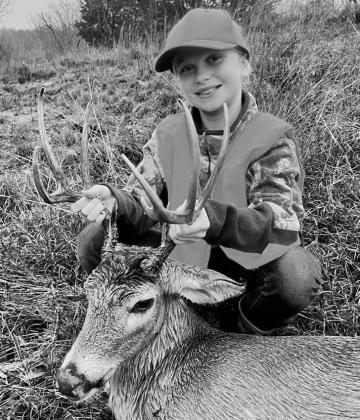
 In addition to its popular “scored entry” category,TBGA has youth and first harvest divisions to recognize the achievements of youngsters and new hunters. Participants are awarded certificates at a series of banquets held around the state during late
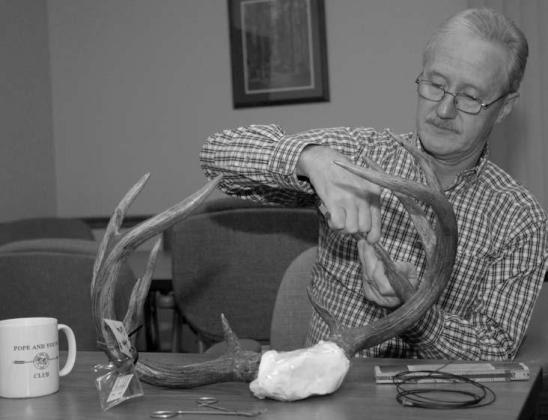 Big game animals must be scored by a certified TBGA or Boone and Crockett scorer and meet the minimum net score the region for entry in the “scored entry” category. A full list of TBGA scorers and other details can be found on the program website, tex
TBGA: Drumming Up Entries
With another round of fall hunting seasons rolling to a close soon, Kara Starr and the rest of the folks at the Texas Wildlife Association in New Braunfels are sounding the bell to Texas big game hunters in hopes of drumming up a solid list of entries for the 2022-23 version of the Texas Big Game Awards Program.
Starr is the coordinator for TBGA, a non-profit program run jointly by the TWA and Texas Parks and Wildlife Department. The hunter/landowner recognition program has been around since 1991, but there are quite a few hunters who know very little about it or how it works. I strike up conversations with hunters every year who have no idea the program even exists.
That’s sad, because TBGA is a really cool deal that is founded on some really good causes. To wit: TBGA isn’t some sort of pay-to-enter contest with cool prizes on the line for those bring down the biggest bucks over the course of hunting season.
Instead, it is more about giving credit where credit is due. The main emphasis is to provide recognition to hunters who harvest quality big game animals and to acknowledge the efforts of land managers/ landowners responsible for producing them, while also stressing the importance of the hunting heritage.
Qualifying participants are invited to bring their mounts for display at a yearend banquet for their region, where they are presented with an awards certificate for their accomplishments. There is no cost to the hunter.
Three regional banquets will be held in spring and summer of 2023: * Regions 4 and 8, May 20 in Fredericksburg * Regions 1, 2 and 3, June 10 in Abilene * Regions 5, 6 and 7, June 17 in Bryan. The program is always free to enter with multiple categories in as many as eight different regions. Categories include whitetailed deer (typical and non-typical), mule deer, pronghorn antelope, javelina, youth and first harvest.
Photos can be uploaded for viewing by region at texasbiggameawards.org. TBGA maintains an extensive database of entries and photos from previous seasons along with a “Trophy Search” link to find information on specific animals.
There are two divisions for white-tailed deer — low fence and high fence. The high fence category now has a sub-category for properties with pure native deer, another for ranches stocked with outside deer to enhance genetics.
Recognition categories include scored entry, youth and first harvest. Scored entries must be measured using the Boone and Crockett scoring system. Scoring must be performed by a certified TBGA scorer, or an official B&C scorer. A full list of scorers is listed by city/county on the TBGA website, texasbiggameawards.org.
Scored entries must meet minimum net scores that vary with the region: * Typical white-tailed deer - 125 to 140 (depending on region) * Non-typical white-tailed deer - 140 to 155 (depending on region) * Typical mule deer - 145 * Non-typical mule deer- 160 * Pronghorn antelope - 70 * Javelina - 13 4/16 Scoring is not required for first big game harvest and youth category entries, unless the animal is also being entered as a scored entry. Youth hunters must be 17 or younger at the time of harvest. There is no age limit for first big game harvest entries.
In addition to hundreds of certificates issued to successful hunters, TBGA also awards nine college scholarships each year to graduating high school seniors, entering college freshmen, sophomores or juniors with academic majors in Agriculture and/ or Natural Resources.
Annual TBGA entry participation usually begins with a trickle and gradually picks up the pace after the holidays leading up to the March 1 deadline. Starr was sitting on about 150 entries on December 15 with more rolling in daily. She is encouraged by a noticeable uptick in first harvest and youth entries.
“With TWA’s Adult Mentored Hunting Program we are entering more new First Harvest adult hunters than before, along with a lot of entries from the Texas Youth Hunting Program,” Starr said. “We’re looking forward to receiving many more entries after the first of the year.”
To learn more about either of those programs, check out tyhp.org or www.texas- wildlife.org/texas-learn-to-hunt-program.
Matt Williams is a freelance writer based in Nacogdoches. He can be reached by email, mattwillwrite4u@yahoo.com.