

 JODY COOK WWI
 JESSE PENNY WWI
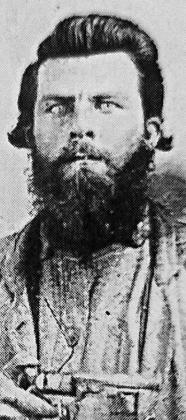 AMOS CLONINGER CYPRESS RANGER
 JAMES RANKIN CYPRESS RANGER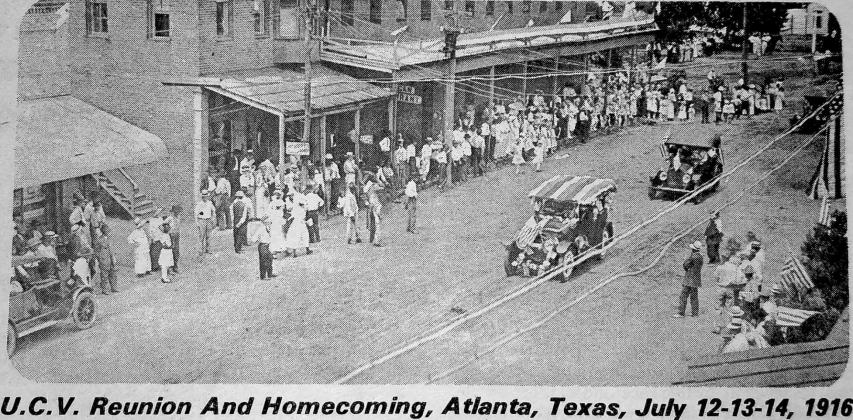
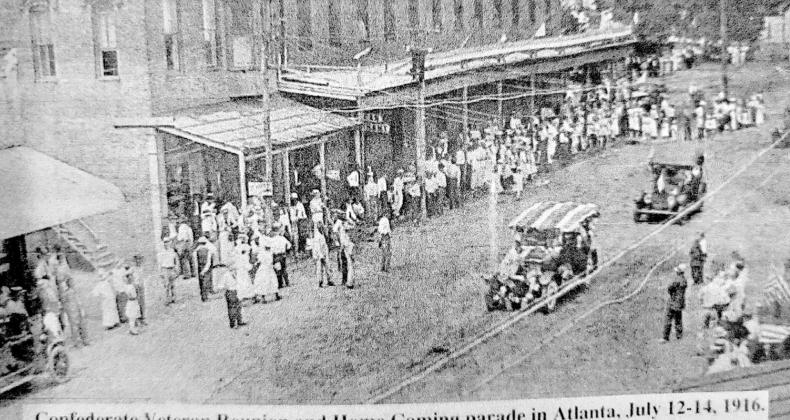
Honoring Cass County Veterans
In honor of Memorial Day, we offer up these stories of veterans past that shaped our little corner of the world.
Cass County faces the Civil War
One of the most trying times for the people of Cass County was in March and April 1864, when the Federal forces occupied Little Rock and New Orleans. At the time, Jefferson was the county seat.
Plans were for a Union army under General N.P. Banks to come north along the Red River and another Union army under General Frederick Steele to come south. The two armies were to meet at Shreveport and drive west through Jefferson and Marshall to Tyler.
On April 8, 1864, at Mansfield, La., a Confederate army under General Richard Taylor defeated the Union army under General Banks. The next day the battle was continued at Pleasant Hill and, although less successful, Banks retired toward New Orleans. During the same month the Union army under General Steele drove south from Little Rock to occupy Camden, Arkansas.
On April 27, under pressure from a Confederate army under General Sterling Price, he was forced to retreat from Camden toward Little Rock.
On April 25 at Mark’s Mill the Confederate cavalry, under General James F. Fagan, had been able to cut Steele’s supply line. The main engagement was an attack on the retreating Union army April 30 at Jenkin’s Ferry. It was unsuccessful in that Steele was able to get his army across the flooded river and continue his retreat toward Little Rock. The entire Confederate operation was under the command of General Kirby Smith who was classically successful in that some of the military units used against Banks were then turned north to use against Steele.
After the Battles of Mansfield, Pleasant Hill and Camden, Kirby Smith estimated the Union losses at 8,000 killed and wounded and 6,000 prisoners.
This was the first and only time that Cass County has been threatened by an invading army.
Captain Joe Tyson
Captain Josephus C. Tyson was born in Georgia in 1833. He was an early pioneer of Miller County, Arkansas, where he settled as a young man to become a prosperous farmer. In 1861, shortly after his marriage to Sarah “Sallie” Mays, Arkansas seceded from the Union and joined with the Confederate States of America. Joseph Tyson led a group of seventy-three local men across the state of Arkansas to southern Missouri, where they were sworn into the Confederacy. There, on august 17th, 1861 they were assigned as Company D of the 4th Arkansas infantry, also known as the “Bright Star Rifles”, with Josephus Tyson elected as captain.
Captain Joe served his Company during many battles and skirmishes, including the largest civil war engagement west of the Mississippi river known as the Battle of Pea Ridge. In a letter to General D.H. Maury from Colonel McNair describing the battle, McNair states he observed many noble and brave men whose actions he had noted.
One man he observed was Captain Josephus C. Tyson who charged the enemy’s battery at the cannons mouth and upon leading his men, fell severely wounded in both legs a few paces from the cannon. After two years of fighting, the fourth Arkansas infantry consolidated with other forces, where Captain Joe enlisted with Crawford’s First Arkansas Calvary. There he was elected third lieutenant. After many more engagements, Captain Joe returned home at the end of the war to his family and farm near Bright Star, Arkansas. He spent the remainder of his life as a farmer, a father of five, and a dignified man of the community.
He was a member of the Olive Branch Masonic Lodge, a public notary, a state representative for Miller County from 1879 to 1883, and a Methodist minister. Josephus C. Tyson passed away February 20th of 1889 and was laid to rest in Sulphur Fork Cemetery in Miller County, Arkansas.
Henry Dennis
Henry Dennis wrote his accounting of the war in a 1929 issue of the Citizens Journal. He was born Nov. 14, 1843, in Troupe County, Georgia, moving to Cass County with his parents in 1854 and settling in the Cornet community. He volunteered and joined the Confederacy in October 1861, making the trip up into Missouri and Kentucky under General Price. Then back to Little Rock, Ark., and then across the Mississippi and was in the battle of Corinth; then to Montgomery, Alabama, back to Louden, Tennessee, and then into Kentucky under General Bragg.
Then back to Corinth and fought in the battle of Iuka and then to Lauden, Tenn., for a few days rest before the battle of Murfreesboro, which lasted two days and nights. The first day of this battle Mr. Dennis lost his shoes and it being the next day after Christmas you can imagine how cold it was.
“The next day while walking around after a nights’ rest I found a dead Yankee, drug him up to a cedar tree, pulled off his shoes and put them on,” he recalled.
“The next battle was fought at Chickamauga; here Lee’s army joined us. Then back to Mississippi and then marched back through Alabama to Rhome and joined Johnson’s army on May 14, 1863. Then went to Jonesboro; here we divided, Hood taking part of us to Tennessee and the next battle was fought at Franklin, Tennessee. We went from there to Nashville then to Mississippi again. We surrendered at Spanish Port, Mobile, Alabama, April 26, 1865.
“In all of my rounds I did not get wounded, but a cannon ball came by me at Nashville, knocking my gun out of my hands, knocking me down and covering me with dirt. After the war, I walked from Mobile home, making the trip in double quick time,” he said.
He married Miss Victory Leftwich in November 1867, and moved to his present place, having lived 62 years in the same house, which is a fine, old fashioned two-story Colonial home. His wife died in 1916.
Dr. Richard McClung
Dr. Richard Lauren McClung was born in Walnut Ridge, Arkansas, and was married to the former Mattie Baker. The McClung’s had come west from Georgia, and the Bakers came from Tennessee. Both families crossed Red River at the Spring Bank Ferry and settled first at Bright Star.
It was from Walnut Ridge that Dr. McClung joined the army during the Civil War. He met with a small band of soldiers and was elected their leader. They then walked to Camden, Arkansas, where they organized Form there the group went on to Tennessee where they encountered their first fighting.
Dr. McClung was captured in Fort Donaldson, Kentucky, and imprisoned at Johnson’s Island in New York. While in prison, he wrote a diary, which still exists. Later he was released and sent back to Mississippi where he was again captured, but this time he escaped and returned home to his wife.
Following the war and his education at Tulane University, the McClung’s moved from Lafayette in Upshur County, to Atlanta in 1873. Both the Bakers and McClung’s had relatives living in Atlanta, and when they wrote about the opportunities in the new sawmill town, the McClung’s decided to move their family here.
At that time land was cheap, and Dr. McClung bought a block of land extending from the present Bogie and Baker Street corner through to what is now Park Street.
Dr. McClung died very suddenly at his home in Atlanta on October 12, 1908, thus ending his long career as one of Atlanta’s first medical doctors and earliest residents.