
 The Journal Sun has begun to rebrand its machines.The branding includes a QR code for the newspaper’s website.
 QR codes come in all sorts of kinds and colors.This QR code on our new branding takes you to the Journal-Sun website. If you scan over the QR code with the camera app it should take you there.
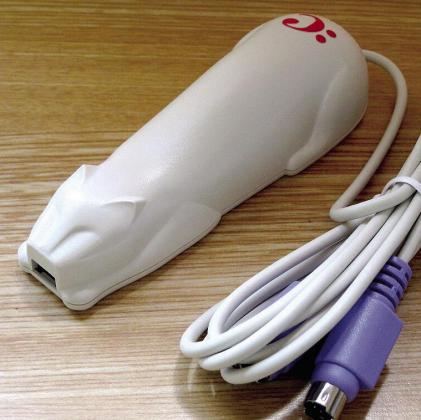 The CueCat device was years ahead of its time but did not work as they would have hoped. Different from the CueCat technology the QR code can be accessed virtually anyway with a handheld device.
What’s up with all of the QR Codes?
If you have lived under a rock over the past five years you would have missed all the QR codes popping up everywhere. These cryptograms store information within the image that gives information to an electric device like your cell phone. The most common use for the general public includes the ability to scan an information box that will open up a link on your phone that will take you to a website or to a place where you can download an app.
These square codes with unusual-looking symbols became commonplace in spots like restaurants during COVID-19 in an attempt to stop the spread of disease, by eliminating hard-to-clean items like menus. Now it is commonplace for businesses to use them in advertising to direct people to a website that will give customers more buying information or a direct link to purchase an item.
QR codes, short for quick-response codes, are a type of two-dimensional matrix barcodes that were invented in 1994 by the Japanese company Denso Wave. The company developed the concept for a better way of labeling automobile parts. Denso Wave then made it so anyone could use the technology.
“Although DENSO WAVE would retain the patent rights to the QR Code, it declared that it would not exercise them. This policy was in place from the very beginning of the code development, honoring the developers’ intent that the QR Code could be used by as many people as possible. Thus the QR Code, which could be used at no cost and without worrying about potential problems, grew into a “public code” used by people all over the world,” according to their website qrcode.com.
A QR code consists of black squares arranged in a square grid on a white background, including some standard markers, which can be read by an imaging device, such as a camera, and processed using an error correction technique until the image can be appropriately interpreted. The required data are then extracted from patterns that are present in both the horizontal and the vertical components of the QR image. – Wikipedia.
You will notice that your local newspaper, like many others around the country, is using QR codes in their newspaper to bridge the gap between print and digital technology. This is not the first time however newspapers have tried to do this.
Noticing an opportunity to better communicate an advertiser’s message, the parent company of the Dallas Morning News invested 37.5 million on a device called the CueCat back in 2000. The goal was very much the same, to place a barcode that would direct advertisers to a link that would give the users more information about the product displayed.
Unfortunately, those companies who invested 185 million dollars in the technology would not see anything from it. It was a huge flop for several reasons. Unlike the current technology that utilizes a device (your cell phone) that most everyone uses the CueCats were limited to those who had one and could only be used on a computer that most of the time would be stationary. 97% (according to Pew Research) of adults own now a smartphone device, In a review from The Wall Street Journal by Walt Mossberg he commented that “In order to scan in codes from magazines and newspapers, you have to be reading them in front of your PC. That’s unnatural and ridiculous.” On top of that, the infrared scanner was difficult to use and the process was a bit of a challenge to sign up for. There were also security breaches.
Now if you have a cell phone and you open up your camera, a link will naturally pop up on your phone. Those who have an older device may need to download an app to utilize the technology.
The technology failed so badly at the time the person who developed the technology changed his name from Jeffry Jovan Philyaw to Jovan Hutton Pulitzer, and his company went bankrupt. However, truth be told many consider his technology just to be ahead of its time.
According to the manufacturers of the QR technology, the history first started in the 1960s. “In the 1960s when Japan entered its high economic growth period, supermarkets selling a wide range of commodities from foodstuff to clothing began to spring up in many neighborhoods.
“Cash registers that were then used at checkout counters in these stores required the price to be keyed in manually. Because of this, many cashiers suffered from numbness in the wrist and carpal tunnel syndrome.
“Cashiers desperately longed for some way to lighten their burden.”
“The invention of barcodes provided a solution to this problem. Subsequently the POS system was developed, in which the price of an item of merchandise was displayed on the cash register automatically when the barcode on the item was scanned by an optical sensor, and information on the item was sent to a computer at the same time.
“As the use of barcodes spread, however, their limitations became apparent as well. The most prominent was the fact that a barcode can only hold 20 alphanumeric characters or so of information.
“Users contacted DENSO WAVE INCORPORATED (then a division of DENSO CORPORATION) who were developing barcode readers at that time to ask them whether it was possible to develop barcodes that could hold more information, saying, “We’d like the capability to code Kanji and Kana characters as well as alphanumeric ones.
Encouraged by these enthusiastic requests, a development team at DENSO WAVE embarked on the development of a new two-dimensional code, all out of their sincere desire to accommodate users’ needs.” For more information on the history of the QR Code go to qrcode. com The manufacturer then developed what we see now, but different than the old bar codes and even the failed CueCat. This code could hold more information and can be read from several different angles.
Despite the results of the CueCat, the news media continues to find new innovative ways to stay ahead of the curve. Building on one of the oldest forms, if not the oldest forms of distributing news.
The Journal-Sun wants to continue to utilize any new technology also to better connect our readers to the news and information they are asking for and to provide advertisers with unique ways to communicate with their patrons.
The combined newspapers of the Atlanta Citizens Journal and Cass County Sun, now the Cass County Citizens Journal Sun, will be 150 years old in just two years. The ongoing goal of the newspaper is to continue to stay strong and provide a useful experience for its readers.
You can expect to see more QR codes popping up in the newspaper. The Journal-Sun rebranded paper machines will also have a QR code on them that will direct people to the digital form of the publication where they can read the periodical online. Don’t worry, though the goal of the newspaper family is to always have a physical copy of the paper. The QR codes will just add an extra benefit to its users.
The newspaper will also be utilizing QR codes on flyers to advertisers so that readers find out more information on a particular promotion they are offering.
If you would like to know better how to use your QR code we will have some more information in the next few weeks. Stay tuned.