

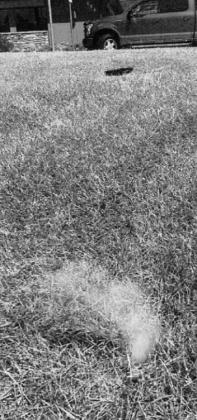
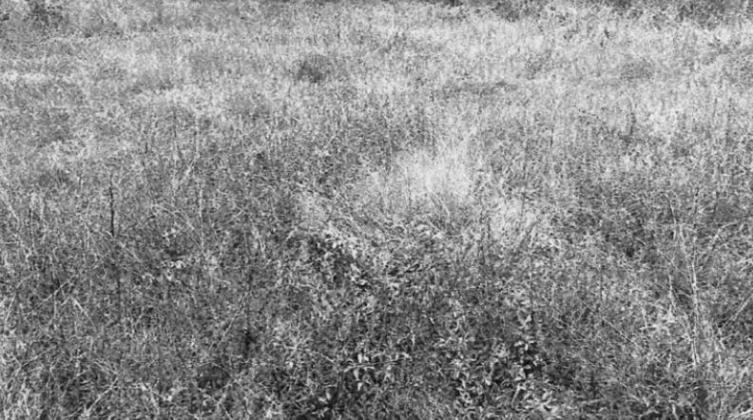
 The City Engineer conducts smoke tests on manholes at O’Farrell Road, Harris Street and Highway 59 by Pizza Hut.
Sewer issues discovered
The findings of a study of sewer lines along Highway 59 and Highway 77, funded by the City of Atlanta, were presented to the city council by A.L. Franks Engineering of Texarkana, Ark. last Monday during its regular meeting.
The council hired the firm to study approximately 24,000 linear feet of sewer main and 89 manholes which were smoke tested to detect leaks.
The purpose of the study was to evaluate the system for “infiltration and inflow (INI)”--leaks that dilute sewage thereby decreasing the efficiency of sewage treatment. The study found numerous leaks, most of which are minor and result in inflow during rain events. Several were noted to be sources of infiltration of groundwater that occur constantly and prioritized for repair.
Jason Haley, an engineer with the firm, announced at the meeting that one leak discovered through the smoke test was the result of a telecommunications company having bored through a water-service line. Water from the one-inch line has been pouring directly into the sewer drain for years.
City Manager David Cockrell said he estimated the wholesale water loss of that leak at approximately $24,000 a year and that finding it had already recouped the expense of conducting the study.
The infiltration of groundwater in the sewer main can increase costs of pumping and chlorination of sewage, and at high rates, may make the sewer incapable of carrying sewage from the service area. Sewage may back up into the lowest homes during wet weather, or street manholes may overflow.
The leaks were detected by the use of smoke testing which consists of blowing smoke mixed with large volumes of air into the sewer line. The smoke travels the path of least resistance and shows up at sites that allow surface water inflow. Smoke will identify broken manholes and illegal connections including roof and yard drains.
The cost for the report and recommended repairs is approximately $15,000 to $30,000.