
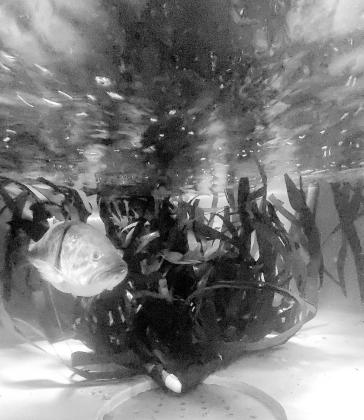
 A Toyota Legacy Lunker sits idle in a Lunker Bunker at the Texas Freshwater Fisheries Center in Athens. Several big bass over 13 pounds from the 2023 collection season are currently paired with select males in spawning raceways at the TFFC. Any resulting
Paired Up
It’s been a busy year for Toyota Share-Lunker. Texas Parks and Wildlife’s popular spawning and restocking program based in Athens accepted 18 fish over 13 pounds during the 2023 collection season, January 1 to March 31.
Lake O.H. Ivie near San Angelo was the program’s top producer for the third consecutive year. The West Texas reservoir produced 15 of the 18 entries, officially called Legacy lunkers. Lakes Nacogdoches, Alan Henry and Possum Kingdom contributed one fish apiece.
The 18 female bass ranged in weight from 13.05 to 17.03 pounds. Fishing guide Jason Conn of Alba caught the 17.03 pounder at O.H. Ivie. Conn’s fish currently ranks as Texas’ No. 8 heaviest bass of all-time, but fell short of the lake record 17.06 pounder reeled in during March 2022 by Oklahoma angler Brodey Davis.
The three-month period spanning January 1 - March 31 is considered the “spawning phase” for program. Anglers who catch fish weighing 13 pounds or more from Texas waters are encouraged to contact TPWD about loaning the fish for spawning.
Biologists are dispatched to the location to evaluate the fish. Bass deemed healthy enough to survive are transported to the program headquarters at the Texas Freshwater Fisheries Center.
There, the big fish are paired with smaller male bass that are offspring from previous ShareLunkers. The idea is produce fish with select genetics.
Texas anglers kept TPWD’s Toyota ShareLunker Response Teams hopping this winter and early spring. TPWD Share-Lunker program coordinator Natalie Goldstrohm says state hatchery trucks gobbled up more than 10,300 miles of highway this collection season, most between Athens and O.H. Ivie. Returning the fish to their respective lakes, along with any fry reaped from successful spawns, will add to the expense of doing business.
TFFC hatchery manager/ShareLunker caretaker Tony Owens has more experience handling heavyweight bass than anyone in TPWD’s inland fisheries division. The veteran fisheries biologist says eight Legacy lunkers are currently paired with males in hatchery raceways at the TFFC.
Owens said three of the fish have spawned thus far resulting in more than 91,000 eggs.
One of the spawns resulted in 32,000 fry that have since been stocked in hatchery growing ponds. All of the fry from 2023 spawns will be divided and restocked in the lakes that produced the mother fish. The stockings typically take place in late spring or early summer.
Interestingly, genetic fingerprinting will allow biologists to identify any of the fry that might grow up to become Sharelunkers in the future, as well as their parents. Since 2015, eight Legacy class ShareLunkers have been identified as direct offspring from previous ShareLunkers, according to TPWD geneticist Dijar Lutz-Carrillo.
--------- Matt Williams is a freelance writer based in Nacogdoches. He can be reached by email, mattwillwrite4u@yahoo.com.